How to Brush Better, Prevent Mats, and Keep Coats Comfortable
A slicker brush is one of the most useful grooming tools you can own, but only if you use it the right way. Used correctly, it helps lift loose hair and tackle early tangles before they turn into painful mats. Used aggressively, it can irritate skin and make dogs hate brushing.
This guide walks you through when to use a slicker brush, how to do it gently, what to do about mats, and how often to brush based on coat type.
What A Slicker Brush Is Best For
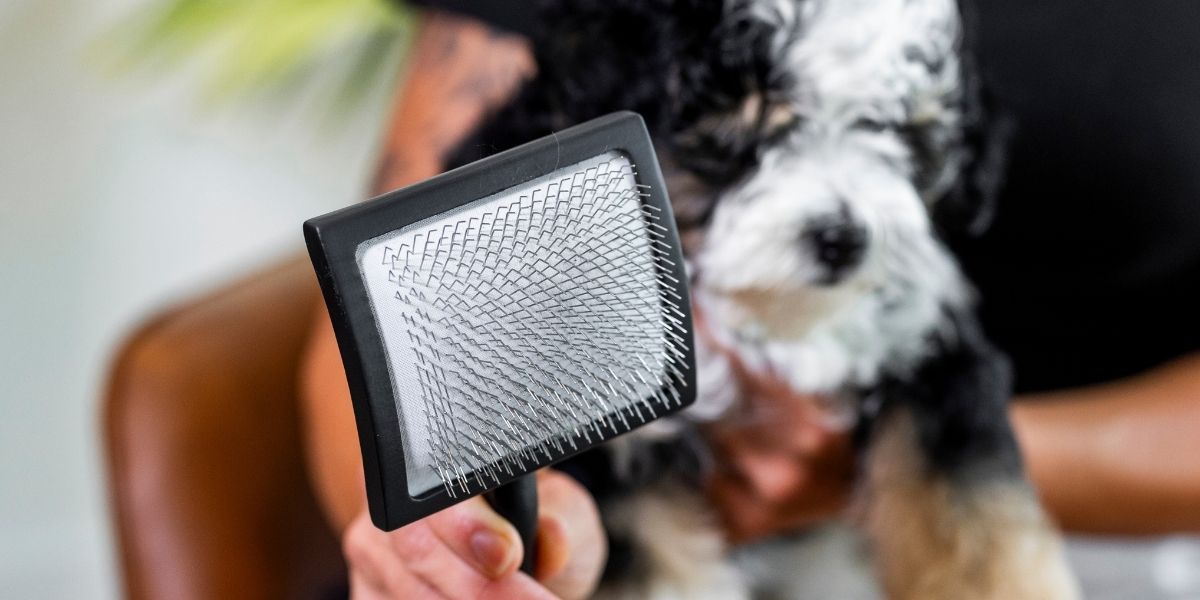
A slicker brush is designed to pull up loose hair and help untangle minor tangles, mats, and snarls, especially in medium to long coats.
Slickers are especially helpful for curly, non-shedding coats (like poodles and many doodles), where hair can trap and tangle instead of shedding out.
Coat Types That Benefit Most
Curly or “Hair” Coats (Poodle, Doodle Mixes)
High mat risk. Slicker brushing is a main tool to keep the coat separated and comfortable.
Double Coats (Golden, Husky, Aussie)
A slicker can help lift loose hair and surface tangles. You may also want a comb or undercoat tool depending on coat density.
Medium Coats Prone To Tangles
A slicker can help prevent mats when used consistently and gently.
If your dog has a very short coat, a slicker may not be the most comfortable daily choice.
The Golden Rule
Brushing should not hurt. If your dog is flinching, pulling away, or showing stress signals, slow down and switch to a softer technique or smaller sections.
Mats are uncomfortable and should be avoided.
The Right Way To Use A Slicker Brush
 Step 1: Set Up For Success
-
Brush when your dog is calm
-
Start with a few minutes, not a full session
-
Use treats or praise so brushing feels normal
Step 2: Work In Small Sections
One of the biggest mistakes is trying to brush the whole dog in long passes. Instead, work in small sections so you do not skim over tangles.
A good pattern:
-
Neck and shoulders
-
Chest and front legs
-
Back and sides
-
Belly and armpits
-
Hips and back legs
-
Tail
Step 3: Use Short, Gentle Strokes
Use light pressure. A slicker does the work through the pin layout, not force. If you press too hard, you can cause brush burn.
Brush with the lay of the coat for general grooming. If you are lifting loose undercoat, you can brush gently from different angles, then finish with the coat direction.
Step 4: Check Your Work
A slicker can make the top look smooth while tangles still exist underneath. After brushing a section, run your fingers through the coat. If you feel snags, keep working gently.
How To Handle Mats Without Making Them Worse
Early, Mild Mats
Early mats can often be brushed out with patience.
Technique:
-
Hold the hair close to the skin at the base of the mat to reduce pulling
-
Work from the edges of the mat inward
-
Use very small, gentle strokes
-
Take breaks if your dog is stressed
Tight Mats Close To Skin
If a mat cannot be easily brushed out, it is safer to have it clipped by a groomer or veterinarian.
Important safety note:
-
Never cut mats out with scissors. Dogs can jerk unexpectedly and get badly injured.
How Often Should You Brush
There is no single number for every dog. Frequency depends on coat type and mat risk.
General guidance:
-
Curly coats and doodle-type coats often need frequent brushing to prevent matting
-
Medium to long coats need regular brushing
-
Some coats may need daily brushing depending on how quickly mats form
If you are not sure, your groomer or vet can tell you what your dog’s coat needs.
Common Slicker Brush Mistakes
-
Pressing too hard and causing irritation
-
Brushing too fast and skipping the underlayer
-
Only brushing the “easy spots” and ignoring friction areas
-
Waiting until mats are tight before addressing them
-
Brushing right before a bath without removing tangles first (mats can tighten when wet)
ASPCA guidance recommends brushing out dead hair and mats before bathing.
Where Mats Form Most Often
These areas mat quickly because of friction and movement:
-
Behind ears
-
Collar area
-
Armpits
-
Belly
-
Back of legs
-
Base of tail
If you only have five minutes, focus here.
Quick Comfort Tips For Brush-Hesitant Dogs
-
Start with 30 to 60 seconds and stop before they get annoyed
-
Reward calm behavior
-
Brush one small area, then take a break
-
Make it part of a routine, not a battle
When To Call A Groomer
Consider professional help if:
-
Mats are tight, large, or close to skin
-
Your dog is in pain or snapping when touched
-
You see redness, odor, or skin irritation under the coat
-
You need a reset haircut or a demat that is beyond gentle brushing
Severe matting can require clipping and sometimes sedation for safety and comfort.
Wasatch Pup Slicker Brush Tips
If your slicker brush has a dense pin layout and comfort-style pins, focus on gentle technique and small sections. Dense pins can be more efficient, but pressure should stay light so your dog stays comfortable.
FAQ
Can I use a slicker brush every day
Some dogs can, especially curly coats, as long as your technique is gentle and your dog’s skin stays comfortable.
Should I brush wet hair
Usually no. Brush out tangles before bathing because wet mats can tighten.
What if my dog hates brushing
Slow down, do smaller sessions, reward calm behavior, and focus on comfort. If pain is involved, check for matting, skin irritation, or sensitive areas.