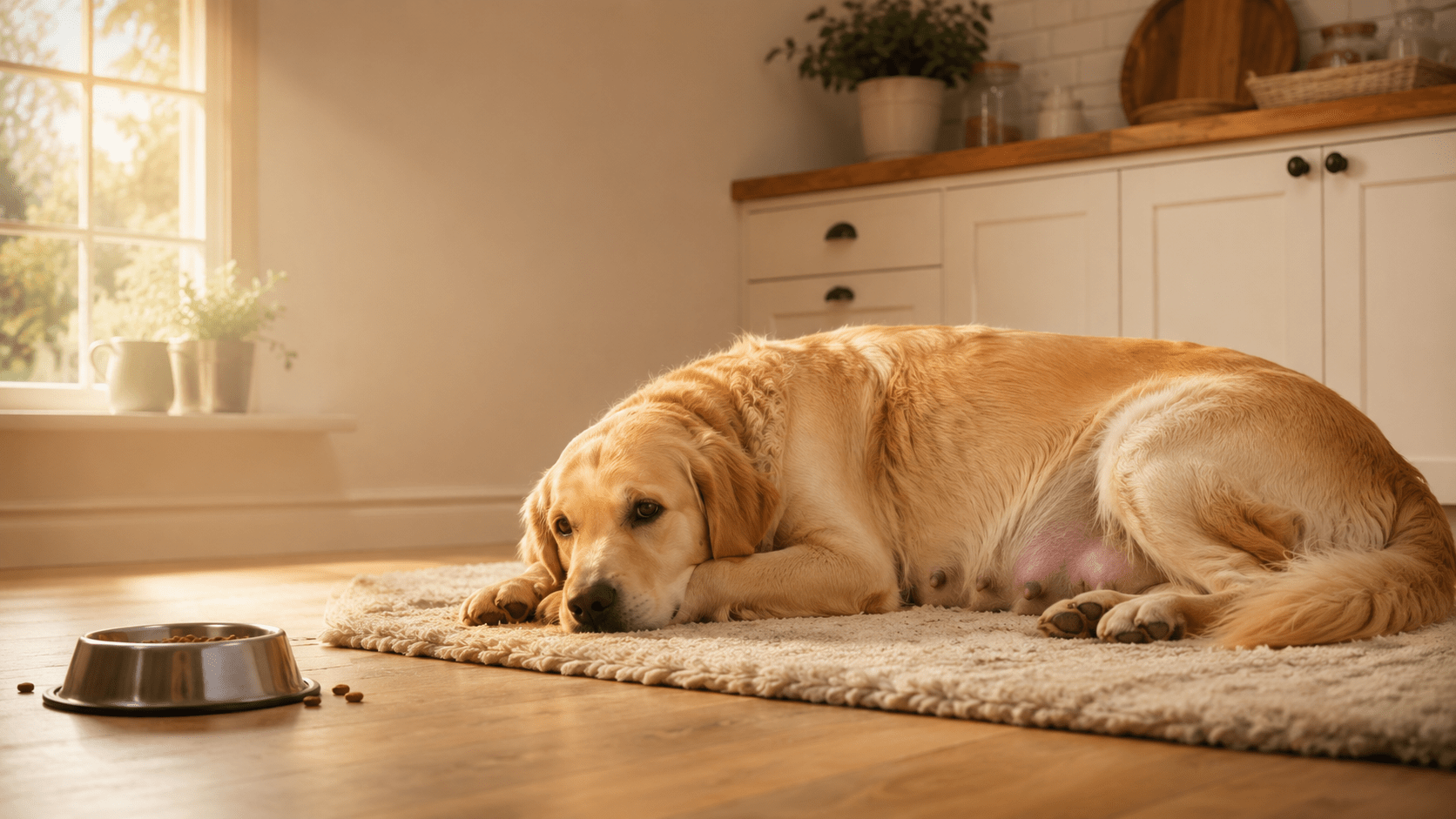
Morning sickness isn't just a human thing. Pregnant dogs experience it too - and for first-time dog breeders, it can be alarming to watch.
The good news: in most cases, it's completely normal, it's temporary, and there's a lot you can do to make your dog more comfortable.
When Does Dog Morning Sickness Happen?
Morning sickness in dogs typically peaks during weeks 3 and 4 of pregnancy - roughly days 21 through 35 after breeding. This lines up closely with the most significant hormonal shifts of early pregnancy, particularly rising progesterone levels, which can affect the gastrointestinal tract and cause nausea.
Despite the name, dog morning sickness can happen at any time of day. It's not limited to mornings.

What Does It Look Like?
Signs of morning sickness in a pregnant dog include:
- Occasional vomiting (usually once or twice, not constantly)
- Decreased appetite or food refusal
- Strong food aversions - she may suddenly hate a food she's always loved
- Excessive drooling or lip licking
- Lethargy and increased rest
- Mild nausea without actual vomiting
Not every dog experiences this. Some sail through early pregnancy with zero symptoms. Others have a rough week or two. Both are completely normal.

What Causes It?
The most significant driver is hormonal. Rising progesterone and estrogen levels during the early weeks of pregnancy directly affect your dog's digestive system. The stomach becomes more sensitive, the esophageal opening relaxes slightly, and gastric acidity can increase - all of which contribute to nausea.
As the pregnancy progresses into weeks 5 and 6, the growing fetuses also begin physically pressing on the stomach, which can cause additional discomfort and occasional vomiting even in the later weeks.
What's Normal vs. What's a Red Flag
Normal:
- Vomiting once or twice a day for a few days
- Reduced appetite for up to a week
- Mild pickiness about food
- Occasional dry heaving
Call your vet if:
- She's vomiting more than 3-4 times per day
- She refuses to eat for more than 48 hours
- She's showing signs of significant dehydration (sunken eyes, dry gums, excessive lethargy)
- The symptoms don't improve by week 5
- You notice bloody or foamy vomit
Important note: In a dog that has NOT been confirmed pregnant, vomiting and appetite loss can be signs of a serious uterine infection called pyometra. If pregnancy hasn't been confirmed yet, get to your vet.

How to Help Her Through It
Feed smaller, more frequent meals. Instead of one or two large meals, offer three to five small ones throughout the day. A lighter stomach is easier on her system.
Try bland, easy-to-digest foods. Boiled chicken and plain white rice are gentle on the stomach. You can mix a small amount in with her regular food to make it more appealing. Plain sweet potato is another good option.
Don't force it. If she turns her nose up at a meal, don't stress. As long as she's drinking water, missing a meal or two won't hurt her. Her appetite will return.
Keep her environment calm. Stress makes nausea worse. Minimize loud environments, new dogs, and major routine changes during weeks 3 and 4.
Offer her food at room temperature. Cold food can be harder on a sensitive stomach. Let refrigerated food come to room temperature before offering it.
Small treats between meals can help. Something small and easily digestible keeps her blood sugar stable. Our Vita Nibbles are a great option - small, nutrient-dense, and gentle.

When Does It End?
Most dogs turn a corner between weeks 4 and 5. As hormone levels stabilize and the body adjusts to pregnancy, appetite typically returns and energy picks back up. Week 4 is often when owners notice their dog looking and feeling much more like herself again.
If your dog's morning sickness is persisting well into week 5 without any improvement, that's worth a call to your vet.
The Bigger Picture
Morning sickness is a small window of discomfort in a much longer journey. Most dogs are only actively affected for about a week to ten days. Keep meals small and frequent, keep her environment calm, and trust that her body is doing exactly what it's supposed to.
She's growing puppies. Cut her some slack.
Sources: PetMD, Bellylabs, WebMD Pets, VCA Animal Hospitals, AKC