Your dog runs to the kitchen the second you open a bag of treats.
You love making that moment happen. But lately, a question keeps popping up in your head: Are these freeze-dried treats actually good for my dog, or am I just falling for clever packaging?
You're not alone. A lot of dog owners are asking the same thing right now. Freeze-dried treats have taken over pet store shelves, and the claims on the labels sound amazing. But what's actually going on inside that little bag?
Let's cut through the noise and look at the real facts on what freeze-dried treats are, whether they're truly healthy, what makes some brands better than others, and how to feed them the right way.
What Are Freeze-Dried Dog Treats?

Before we talk about whether they're healthy, it helps to understand what freeze-drying actually is, and it's simpler than it sounds.
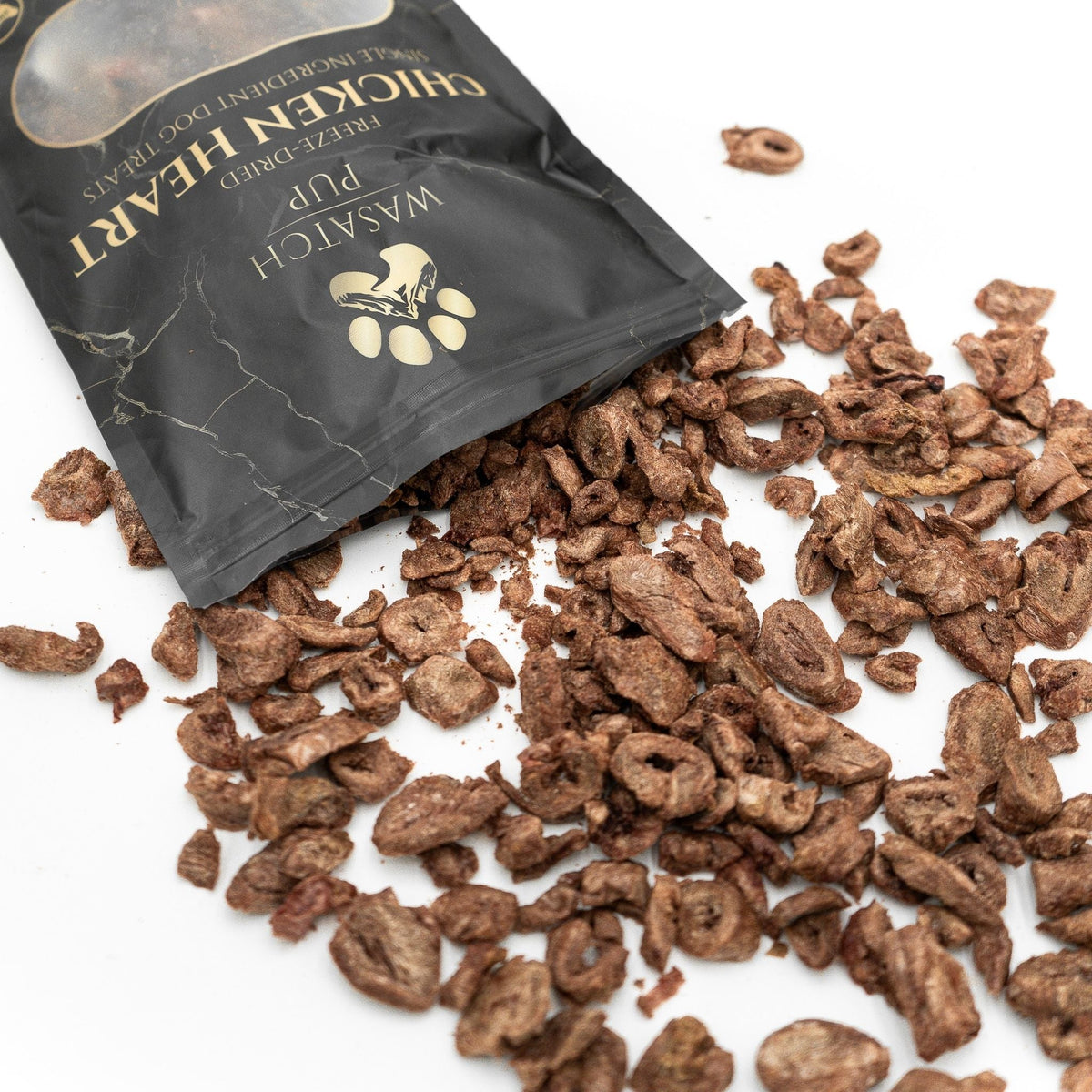
The process starts with real ingredients, like raw chicken hearts, salmon, beef liver, or white fish. Those ingredients are frozen solid. Then they go into a vacuum chamber, where all the moisture evaporates without any heat involved. What you're left with is a lightweight, crunchy piece of food that still holds almost everything the original ingredient had: Flavor, nutrients, and all.
No cooking. No heat. No stripping away what makes the food good.
How Is This Different from Other Treats?
- Dehydrated treats use gentle heat to remove moisture. The problem is that heat breaks down some vitamins and natural enzymes. Still better than most grocery store treats, but not quite as nutrient-packed.
- Baked or processed treats are cooked at high temperatures and often loaded with fillers, artificial flavors, and preservatives to make up for everything the process destroys.
- Raw treats are unprocessed and nutritionally rich, but they need refrigeration and carry higher handling risks.
- Freeze-dried treats sit in the sweet spot — they keep a very high percentage of the nutrition of raw food but stay shelf-stable without refrigeration.

Are Freeze-Dried Dog Treats Healthy?
Yes — and this isn't just marketing spin. When freeze-dried treats are made from quality whole-food ingredients, they're one of the most nutrient-rich options you can give your dog.
But there's one thing you need to keep in mind: the health value comes entirely from what's inside the bag.
A freeze-dried treat made from a single ingredient, say, pure beef liver or Alaskan wild-caught white fish, is very different from one that has a long list of ingredients you can't pronounce, even if both say "freeze-dried" on the front.
So the honest answer is: freeze-dried treats can be genuinely healthy, but you have to pick the right ones. The process is good. The ingredient quality is what makes or breaks it.
Benefits of Freeze-Dried Dog Treats
- Nutrition That Survives the Process
Most pet foods are cooked, which means a lot of the natural vitamins, amino acids, and enzymes are destroyed before your dog ever takes a bite. Freeze-drying skips the heat entirely, so the nutritional content stays remarkably close to what it was in the original raw ingredient.
For dogs who eat kibble every day, which goes through intense heat processing, adding a freeze-dried treat here and there gives them a small but real boost of bioavailable nutrients.
2. Short Ingredient Lists You Can Actually Read
Flip over a bag of freeze-dried single-ingredient treats, and you might see exactly one thing on the label: "Beef liver." Or "Chicken heart." That's it. No mystery fillers, no artificial colors, no chemicals that take a chemistry degree to identify.
This makes freeze-dried treats a great option for dogs with food sensitivities or allergies; you know exactly what's going into their mouth.
3. Long Shelf Life, Naturally
Because all the moisture has been removed, bacteria and mold have nothing to work with. Freeze-dried treats stay fresh for a very long time without needing artificial preservatives like BHA, BHT, or ethoxyquin, the kinds of chemicals you probably don't want in your dog's snack jar.
4. Easy to Carry, Easy to Use
No refrigeration needed. No greasy residue on your hands. No soggy mess at the bottom of your treat pouch during a training session. Freeze-dried treats are light, clean, and travel-friendly, which makes them a favorite among dog trainers and active pet owners.
5. Dogs Are Absolutely Obsessed with Them
Let's be honest, this one matters. Freeze-dried treats have an incredibly strong smell because the flavor is so concentrated. Most dogs react to them as if they've just discovered the greatest thing on earth. That high-value reward is exactly what you want when you're teaching a new command or trying to hold your dog's attention
around distractions.

Are There Any Downsides?
Being honest with you here: yes, there are a few things worth knowing before you stock up.
They Cost More
Freeze-dried treats aren't cheap. The process takes longer and requires specialized equipment, so the price tag reflects that. If you're on a tighter budget, this can be a real consideration. The good news is that because of how flavor-intense and nutrition-packed they are, a small piece goes a long way; you don't need to hand over a
big chunk every time.
Handle Them Like Raw Food
Since freeze-dried treats are essentially raw food with the water removed, there's a small bacterial risk (think Salmonella or E. coli) if a product wasn't processed and tested properly. This doesn't mean you should avoid them; it just means you should wash your hands after handling them, especially in households with young children, elderly family members, or anyone with a weakened immune system.
Note, it is important to buy your freeze-dried products from a trusted source that prioritizes safety at every step, from sourcing to packaging.
Because freeze-drying alone does not eliminate harmful bacteria like Salmonella or E. coli, we focus on using high-quality, responsibly sourced ingredients and carefully controlled handling processes to reduce risk. Every batch is produced with strict sanitation standards and tested to ensure it meets our safety expectations, so you can feel confident you’re giving your dog a clean, high-quality treat.

Not All Brands Are Worth Your Money
The words "freeze-dried" on a label don't automatically mean the treat inside is high quality. Some brands use low-quality ingredients or hide fillers behind the process name. Always read the full ingredient list before you buy. We'll cover exactly what to look for in the next section.
What to Look for When Buying Freeze-Dried Treats

Shopping smart doesn't have to take forever. Keep these guidelines in your back pocket, and you'll be fine:
Look for named protein sources at the top of the ingredient list. "Chicken" is great. "Poultry by-product" or "animal digest" are red flags.
Shorter ingredient lists are almost always better. One or two recognizable whole-food ingredients? Perfect. A paragraph of additives? Put it back.
Avoid added salt, sugar, onion, garlic, or "natural flavor"; that last one is often a vague catch-all that hides things you wouldn't otherwise approve of.
Look for brands that tell you where their ingredients come from. Transparency is a sign of a company that's proud of what it's making.
USDA-inspected facilities or products made in the USA, Canada, Australia, or New Zealand tend to have stricter safety standards.
Third-party testing is a bonus. It means someone outside the company has verified the product is safe.
Freeze-Dried vs. Other Treat Types
Here's a quick side-by-side look so you can see where freeze-dried treats actually stand:
|
Treat Type |
Nutrition |
Shelf Life |
Convenience |
|---|---|---|---|
|
Freeze-Dried |
⭐⭐⭐⭐⭐ |
⭐⭐⭐⭐⭐ |
⭐⭐⭐⭐⭐ |
|
Dehydrated |
⭐⭐⭐⭐ |
⭐⭐⭐⭐ |
⭐⭐⭐⭐ |
|
Raw |
⭐⭐⭐⭐⭐ |
⭐⭐ |
⭐⭐ |
|
Baked/Kibble |
⭐⭐ |
⭐⭐⭐⭐⭐ |
⭐⭐⭐⭐⭐ |
|
Jerky |
⭐⭐⭐ |
⭐⭐⭐⭐ |
⭐⭐⭐⭐ |
Freeze-dried gives you the best of most worlds: strong nutrition, long shelf life, and daily convenience. Raw edges it out on pure nutrition, but the storage and handling requirements make freeze-dried the more practical choice for most households.
How to Feed Freeze-Dried Treats the Right Way

Even the best treat in the world needs to be fed responsibly.
Here's how to get it right:
Stick to the 10% Rule
Treats — including freeze-dried ones — should make up no more than 10% of your dog's total daily calories. They're a supplement to their diet, not a replacement for it. Going over that limit regularly can throw off their nutritional balance over time.
Break Them into Smaller Pieces
You don't need to hand over a whole treat every time. Especially for training, tiny pieces are plenty — the smell and flavor are so strong that your dog gets the full reward either way. Smaller pieces also mean the bag lasts longer, which helps with the cost.
Introduce New Treats Slowly
If your dog has a sensitive stomach, start with a small amount and increase gradually over a few days. Even clean, high-quality ingredients can cause temporary digestive upset if introduced too fast.
![]() Store Them Properly
Store Them Properly
Seal the bag tightly after every use and store it in a cool, dry spot away from direct sunlight. Most freeze-dried treats are good for months after opening when stored correctly — no fridge needed. Try to use an open bag within 4 to 6 weeks for the best freshness.
Wash Your Hands
Basic food safety — treat these the same way you'd treat raw meat in your kitchen. Quick handwash, every time.

Frequently Asked Questions
Here are the most common questions dog owners have — answered directly and honestly.
|
Q Are freeze-dried treats safe for puppies? |
||
|
Yes, in most cases. Just introduce them slowly and in small amounts, since puppies have more sensitive digestive systems. Break them into tiny pieces and make sure the treats don't contain any ingredients that are unsafe for young dogs — like added salt, onion, or garlic. When in doubt, check with your vet.
|
|
Q Can dogs eat freeze-dried treats every day? |
|
Yes, as long as you're keeping an eye on portion size. Daily treats are fine and can actually add nutritional variety to your dog's diet. Just make sure the total treat calories stay within 10% of their daily intake, and you're good. |
|
Q Are freeze-dried treats better than raw treats? |
||
|
Raw treats are slightly higher on the nutritional scale because nothing has been altered. But they need refrigeration, spoil quickly, and carry a higher bacterial risk. Freeze-dried treats preserve most of that nutrition while being far easier to store and handle. For most pet owners, freeze-dried is the smarter, more practical choice. Q Are freeze-dried treats good for dogs with allergies? They can be excellent for allergic dogs — especially single-ingredient options. If your dog is allergic to chicken, you can confidently pick a salmon-only treat with no cross-contamination risk. Always read the label carefully and look for brands that are manufactured in allergen-controlled facilities.
|

The Bottom Line
Freeze-dried dog treats are one of the most genuinely healthy options on the market today — when you choose the right brand. They're minimally processed, nutritionally dense, free from artificial preservatives, and loved by dogs of every size and breed.
The key is being a smart shopper. Read the ingredient list. Look for whole-food ingredients you recognize. Choose brands that are transparent about where their ingredients come from. And feed them in the right amounts.
Do that, and freeze-dried treats aren't just a snack — they're a small, daily way to give your dog something real and nourishing.
And honestly? Watching your dog light up the second that bag crinkles? That never gets old.
PREMIUM DOG TREATS
Ready to Find the Best Treats for Your Dog?
Explore trusted, wholesome treat options at WasatchPup.com — because your dog deserves the real thing.
VISIT WASATCHPUP.COM
This article is for informational purposes only and does not replace professional veterinary advice.
Always consult your vet about your dog's specific dietary needs.