Single-Ingredient vs. Multi-Ingredient Dog Treats: Which Are Best for Your Pup?

You want to make good choices for your dog. But how do you know which type of treat is actually better?
The short answer: it depends. But let's break it all down so you can decide with confidence.
What Are Single-Ingredient Dog Treats?

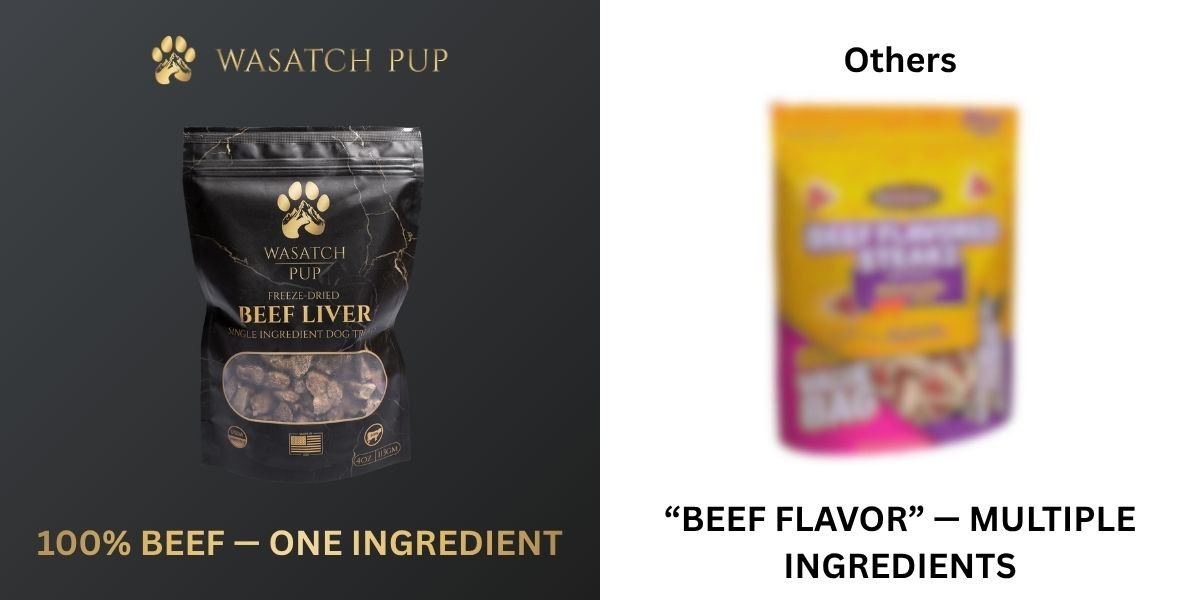
There’s no guesswork involved here—these treats are made with one ingredient, period. One food. Nothing else.
Think dried chicken breast, dehydrated sweet potato, freeze-dried beef liver, or salmon skins. That's it: no added flavors, no fillers, no mystery ingredients.
Our commitment to integrity ensures that our packaging is an exact reflection of the product within.
Why Dog Owners Love Them

Freeze-Dried Beef Liver
Easy to understand. If the bag says "duck," it's duck. No translation needed.
Great for dogs with food sensitivities. Identifying the problem is simple when there's only one ingredient.
Digestion is usually easier. Fewer ingredients mean less work for your dog's gut.
A clean choice. No artificial colors, no preservatives, no hidden additives. Just real food.
When Single-Ingredient Treats Work Best

Freeze-Dried Chicken Heart
- Dogs with known allergies or food sensitivities.
- Puppies being introduced to new foods.
- Dogs on elimination diets recommended by a vet.
- Owners who want full transparency about what their pet eats.

Freeze-Dried Alaskan Whitefish
What Are Multi-Ingredient Dog Treats?

A wholesome mix of several food sources, often enhanced with extra nutrients for a balanced reward. This category covers most commercial dog treats — biscuits, chews, training rewards, and flavored snacks.
Common examples include peanut butter and oat biscuits, chicken and blueberry training treats, or dental chews made from a blend of ingredients.
The Upside of Multi-Ingredient Treats

More variety in flavor and texture. Dogs enjoy different tastes, and blended treats can deliver a richer flavor experience.
Balanced nutrition in one bite. Some multi-ingredient treats include vitamins, minerals, or functional ingredients like probiotics or joint support.
Great for training. Small, soft, multi-ingredient treats tend to be especially popular as rewards during sessions.
What to Watch Out For

Not all multi-ingredient treats are made equally. Some common concerns include:
- Fillers with little nutritional value. Corn syrup, artificial flavors, or wheat by-products sometimes appear in lower-quality options.
- Hard-to-read labels. Long ingredient lists can be confusing. Some terms are vague — like "meat meal" or "natural flavoring."
- Hidden allergens. A dog that does fine with chicken might react to another ingredient hidden deeper in a formula.
The key is reading labels carefully and looking for treats made with real, named ingredients.
Head-to-Head: Single vs. Multi-Ingredient Treats
Here's a simple side-by-side look at how both types compare across what matters most:
|
Factor |
Single-Ingredient |
Multi-Ingredient |
|---|---|---|
|
Health Impact |
Very clean, minimal processing |
Varies by brand & formula |
|
Allergy Safety |
Excellent — easy to isolate reactions |
Trickier — more variables |
|
Training Use |
Works well for motivated dogs |
Often preferred — richer aroma & taste |
|
Cost / Value |
Can cost more per bag |
Usually more affordable per treat |
|
Digestibility |
Often easier on the gut |
Depends on ingredient quality |
|
Transparency |
Very high |
Depends on the brand |
Neither wins in every category. Both have a real place in your dog's treat rotation.
So, Which One Is Actually Better?
-
Here's the honest answer: neither is universally better. The right choice depends on your dog. - If your dog has a sensitive stomach or a known allergy, single-ingredient treats are the safer pick. You control exactly what goes in.
- If your dog is healthy and you're using treats for training or variety, a high-quality multi-ingredient option can work wonderfully.
- Many dog owners use both. They reach for single-ingredient treats when they want something clean and simple. They use multi-ingredient ones during training or as an occasional reward.
Think about your dog's specific needs. Then choose accordingly.
Why Ingredient Quality Matters More Than the Number of Ingredients

Whether you pick one ingredient or ten, quality is what really counts.
A single-ingredient treat made from low-grade mystery meat isn't automatically better than a multi-ingredient treat made with thoughtfully sourced whole foods.
What to Look for on Any Treat Label
-
Named protein sources. "Chicken" is better than "poultry." "Salmon" is better than "fish meal." - Short, readable ingredient lists. The fewer words you don't recognize, is always a better sign.
- No artificial additives. Avoid artificial colors, artificial flavors, and chemical preservatives like BHA, BHT, or ethoxyquin.
- Minimal processing. Freeze-dried, air-dried, and dehydrated treats tend to preserve more nutrients.
Real ingredients, handled with care — that's the standard worth looking for.

The Bottom Line
- Single-ingredient treats are clean, simple, and great for sensitive dogs. Multi-ingredient treats offer flavor variety and are often ideal for training.
- Neither is perfect for every dog. Both can be a healthy part of your dog's life when made with quality ingredients.
- The smartest approach is to pay attention to your dog. Notice how they respond to different treats. Read labels. Ask questions. And trust what works for your pup specifically.
You just need to know what to look for — and now you do.
WasatchPup.com | Healthy & Natural Dog Treats
-----------------------------------------------------------