Because Walks Should Be the Best Part of your Day, not a Daily Tug of War.

You grab the leash. Your dog loses their mind.
You step outside, and within seconds, you are being pulled down the street.
Your arm is tight. Your patience is gone. And somehow your dog is still winning.
Sound familiar?
You are not alone. Leash pulling is one of the most common frustrations dog owners deal with, whether you have a small dog or a large, powerful breed.
And here is the part most people get wrong:
Your dog is not ignoring you. Your leash setup may be working against you.
Dogs pull because it works. They lean forward, pressure builds, and they still move.
That means the leash is not actually teaching them anything.
So even if you are trying to train correctly, your gear may be reinforcing the exact behavior you are trying to stop.

QUICK ANSWER
To stop leash pulling fast:
- Stop walking every time your dog pulls
- Reward every time the leash goes loose
- Use a leash that actually redirects pressure instead of allowing your dog to push through it
Pulling equals no movement
Loose leash equals forward progress
When your leash reinforces this clearly, dogs learn much faster.
Why Dogs Pull on the Leash
Before fixing the problem, it helps to understand it.
Dogs are not being stubborn or dominant. They are responding to what works.
Common reasons dogs pull:
- Excitement from smells, movement, and stimulation
- No training for leash behavior yet
- Natural walking pace is faster than that of humans
- Forward movement rewards pulling
- High energy before the walk starts
Once you understand this, the solution becomes much clearer.
Why Most Leash Training Fails

Most advice tells you to stop, wait, and reward.
That advice is correct.
But here is the missing piece:
The leash itself often still allows forward pulling.
Traditional setups:
- Back clip harnesses let dogs lean into pressure
- Standard leashes apply tension but do not redirect it
- Dogs learn they can push through resistance
So you end up repeating the same cycle:
Dog pulls
You stop
The dog pulls again
Nothing changes
This is why so many people feel like they are doing everything right but still getting dragged.
What Actually Stops Pulling
To truly fix pulling, two things must happen at the same time:
1. Your dog must stop moving forward when they pull
2. The pressure must clearly change when they pull versus when they walk correctly.
- This is where most tools fail.
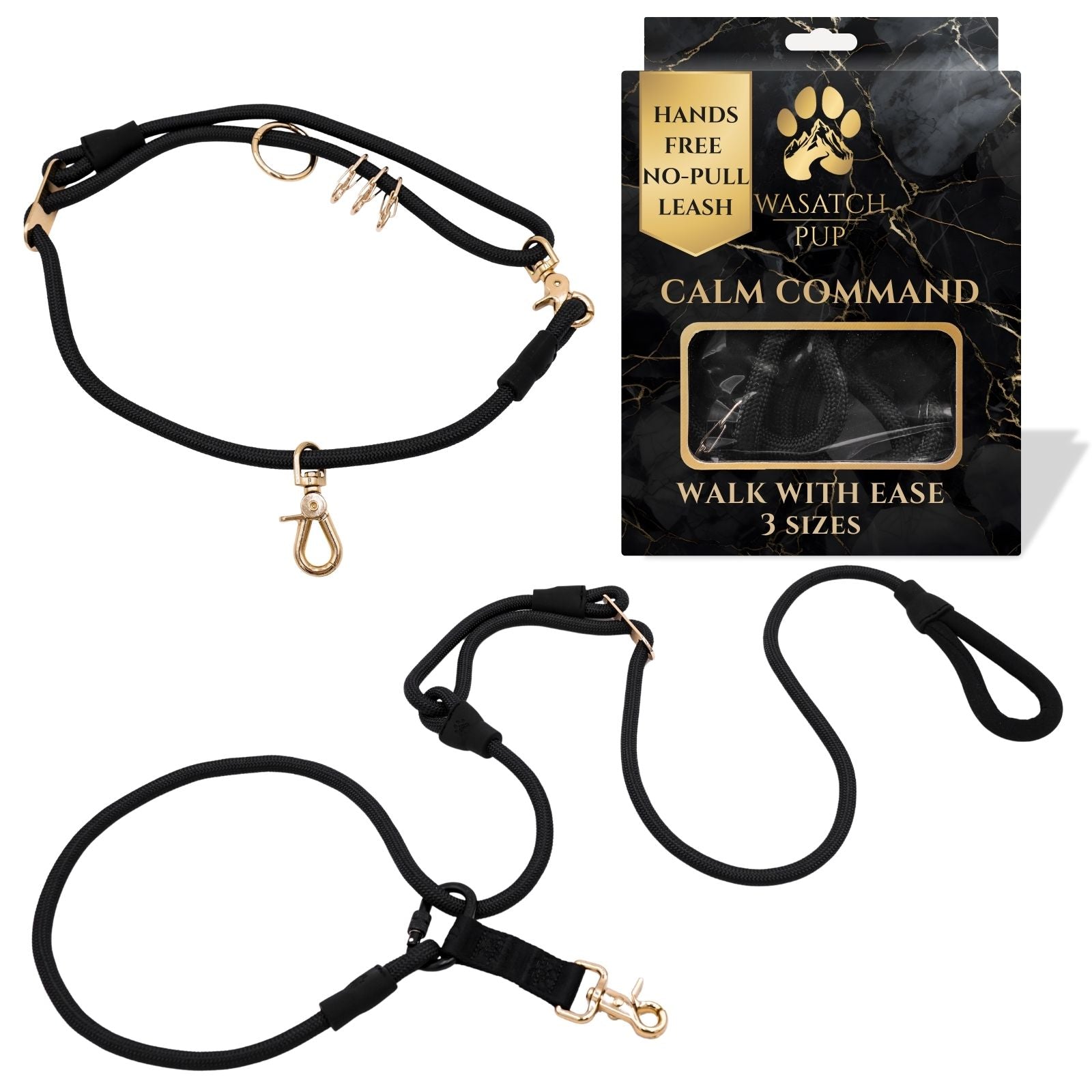
- Calm Command works differently.
Instead of applying pressure to the neck or chest, it wraps around your dog’s body and redirects pressure to the torso.
That means:
- Pulling creates gentle, distributed pressure around the body.
- Dogs naturally slow down instead of pushing harder.
- The moment they stop pulling, the pressure disappears.
No jerking. No choking. No confusion.
Just clear communication, your dog can understand immediately.
How to Stop Leash Pulling (That Actually Works)

1. Start Before You Leave the House
If your dog is overly excited when you grab the leash, pause. Only move forward when they are calm.
2. Stop and Wait
The moment your dog pulls, stop completely.
Do not yank or correct harshly. Just wait.
When the leash goes loose, move forward again.
With the right leash setup, your dog will feel the difference immediately.
3. Reward the Right Position
Reward your dog for walking next to you, not just for stopping pulling.
This teaches them where they should be, not just what to avoid.
4. Change Direction
If your dog pulls, calmly turn and walk the other way.
This brings their focus back to you instead of what is ahead.
5. Train in Low Distraction Areas
Start somewhere quiet, then build up to more distractions over time.
6. Keep Sessions Short
Ten to fifteen minutes of focused training is more effective than long, frustrating walks.
Trainer Tip
- If your dog pulls harder the more you correct them, it is not stubbornness.
- It usually means the pressure is being applied in a way they can push through.
- Change the feedback, and behavior changes faster.
Why the Right Leash Makes All the Difference
- Training matters, but the leash you use determines what your dog actually learns.
- Most tools either manage pulling or fight against it
- Very few actually teach your dog what to do instead.
Why the Right Leash Makes All the Difference

Training matters, but the leash you use determines what your dog actually learns.
Most tools either manage pulling or fight against it. Very few actually teach your dog what to do instead.
Here is how the most common options compare.
Calm Command No Pull Leash (Best Overall Option)
This is one of the simplest and most effective tools for stopping pulling without adding bulky gear.
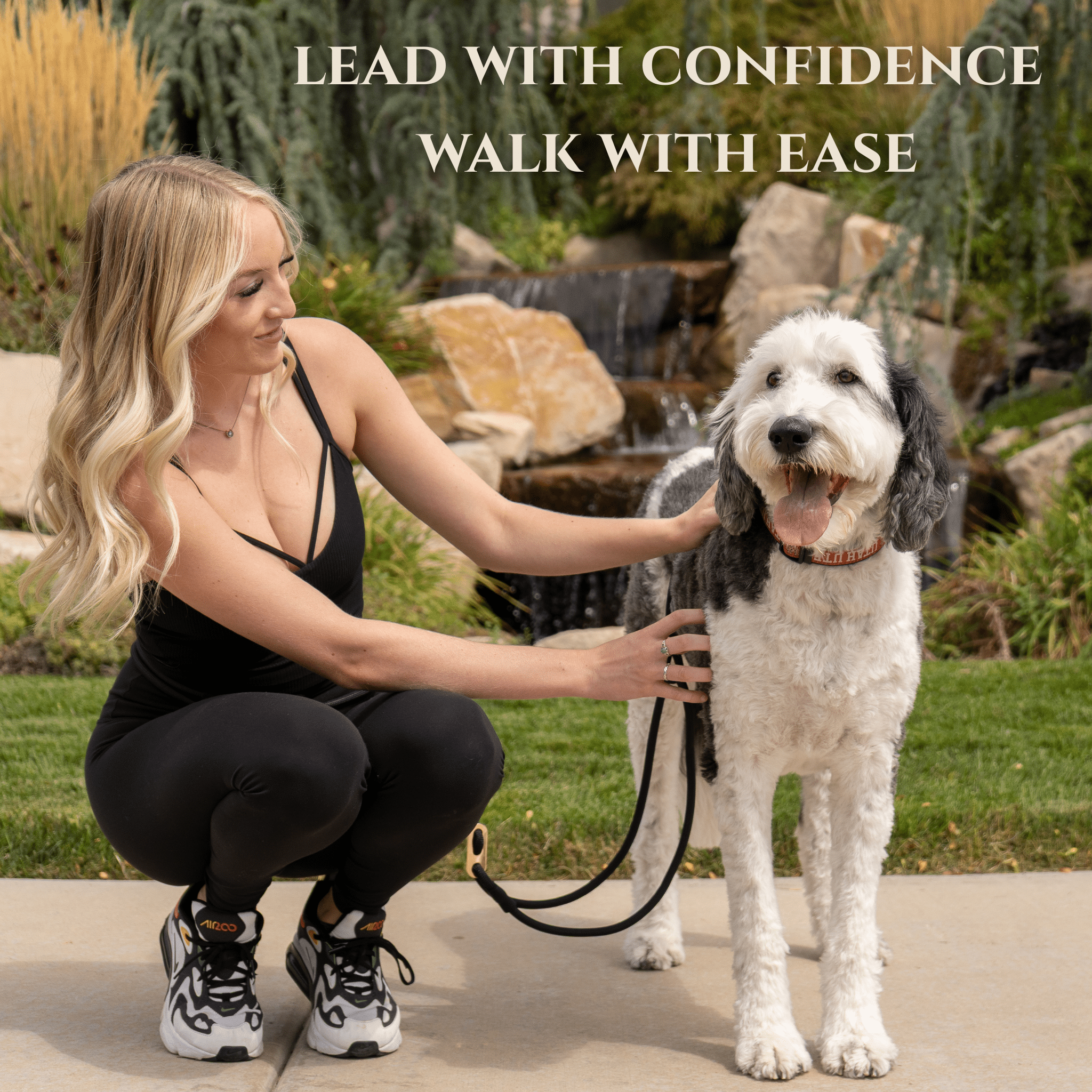
TheCalm Command leash gently wraps around your dog’s body and applies even, natural pressure when pulling starts.
This helps your dog clearly understand what is happening while reinforcing proper walking behavior in real time.
Unlike harnesses or head halters, it does not rely on forcing direction or restricting movement. Instead, it works with your dog’s natural motion while avoiding pressure on the neck.
Why it stands out:
- Reduces choking and neck strain.
- No bulky harness required.
- Clear, consistent feedback that speeds up training.
- Easy to use on any walk.
- More comfortable than head-based systems.
- Hands-free belt with S carabiners for carrying accessories.
- Premium stitching with an ergonomic handle for long-term comfort.
This is one of the few options that balances control, comfort, communication, and
simplicity, making it ideal for everyday use, not just training sessions.
Front Clip Harness
- A front clip harness redirects your dog’s forward momentum by attaching the leash at the chest.
- Brands like Ruffwear, Kurgo, and PetSafe offer solid options.
Limitations:
- Does not fully stop pulling, especially with stronger dogs.
- Bulky and takes time to put on.
- Often manages behavior more than it teaches it.
Standard 4 to 6 Foot Leash
A standard leash provides control and basic communication.
- Limitations:
- Does not prevent pulling
- Requires consistent training to be effective
- Offers no built-in feedback
Avoid retractable leashes during training because they reinforce pulling.
Head Halter
Head halters guide your dog’s head and control direction.
- Limitations:
- Many dogs resist wearing them.
- Can feel unnatural or uncomfortable.
- Requires careful introduction.
- Can limit your dog’s ability to fully enjoy the walk.
Bottom Line
There are many tools that help manage pulling, but very few that combine:
- Comfort for your dog
- Clear communication
- Simplicity for everyday use
That is where theCalm Command No Pull Leash stands out.
If you want calmer walks without complicated gear or constant frustration, starting with the right leash makes a real difference.
Common Mistakes That Keep Dogs Pulling

- Being inconsistent.
- Pulling back harder instead of changing feedback.
- Using gear that allows dogs to lean into pressure.
- Training in environments that are too distracting.
- Giving up too early.
If your dog can pull comfortably, they will continue pulling.
How to Speed Up Results
- Train before meals for better focus
- Reward eye contact and check-ins
- Keep sessions short and positive
- Reduce excess energy before training
- Use a leash that reinforces the right behavior
When your setup supports your training, progress happens faster.
Frequently Asked Questions
Why does my dog pull so hard?
Answer: Because pulling leads to forward movement, which is rewarding.
How long does it take to fix?
Answer: Most dogs improve within two to four weeks with consistency.
Do I still need training with a better leash?
Answer: Yes, but the right leash makes learning much faster and easier.
Is this safe for my dog?
Answer: Yes. Pressure is distributed across the body instead of concentrated on the neck.
You Should Actually Enjoy Walking Your Dog
- Walks should not feel like a fight.
- They should feel calm, controlled, and enjoyable for both of you.
- When your dog understands what you want, and your leash supports that communication, everything changes.
Ready to Fix Pulling for Good

- If you are tired of being dragged on every walk, it is not just a training issue.
- It is a communication issue.
Try theCalm Command Hands Free No Pull Leash and feel the difference on your next walk