The Wrap-Around Leash Method: Does It Work, Is It Safe, and Why We Built It Into Calm Command™
If you've spent any time in dog training groups online, you've probably seen the wrap-around leash method. Someone loops a standard leash around their dog's torso, and a dog that normally pulls through the entire walk suddenly seems easier to manage.
Some owners swear by it. Others question whether putting pressure around a dog's body is safe.
Both sides raise points worth discussing. The wrap-around method has been used by dog owners and trainers for years, but how it's applied matters. There's also a difference between improvising the technique with a regular leash and using a product designed with that configuration in mind.
At Wasatch Pup, we saw the potential in this approach and made it part of our Calm Command™ No-Pull Leash. Here's how the method works, what to consider before using it, and why we chose to incorporate it into our design.
What Is the Wrap-Around Leash Method?
The wrap-around leash method, sometimes called a belly wrap, half hitch, waist wrap, or torso wrap, involves positioning a section of leash around the dog's body.
When the dog moves forward and creates tension, the wrap applies pressure around the torso. When the dog slows down or stops pulling, that tension releases.
It's a simple pressure-and-release concept. Rather than relying entirely on tension at the collar, the dog receives additional physical feedback when pulling.
Every leash setup handles force differently. A traditional collar places tension around the neck, while harnesses distribute or redirect force across other areas of the body. The wrap-around method introduces another point of contact around the torso.
The amount and location of that pressure depend on the dog's size, the positioning of the leash, and how much force the dog generates.
Does the Wrap-Around Leash Method Actually Work?
For some dogs, the change can be noticeable.
Owners have reported improvements in pulling after introducing the wrap-around method, sometimes during the first few walks. Others find that their dogs need more time to adjust or respond better to a different approach.
The idea is that pulling creates tension around the body, while walking without pulling allows that tension to release. With consistent handling and reinforcement, some dogs may begin to associate a loose leash with a more comfortable walking experience.
That doesn't mean the wrap does the training for you.
A dog that pulls because of excitement, fear, frustration, or reactivity may need more than a change in equipment. The method can help manage pulling, but it doesn't necessarily address the reason the dog is pulling in the first place.
We see the wrap-around method as another tool that owners can use alongside consistent loose-leash training, not as a guaranteed fix for every dog.
Is the Wrap-Around Leash Method Safe?
This is one of the most common questions about the technique, and it's a reasonable one.
The main concern is pressure around the dog's abdomen, especially when a larger or stronger dog suddenly lunges forward.
It's important to recognize that any restraint system can create substantial force when a dog pulls hard enough. A collar, harness, or wrap-around leash will each transfer that force to different parts of the body.
The wrap-around method shifts some of that tension away from the neck and toward the torso. However, that doesn't automatically make it safer than every other leash or harness configuration.
The dog's anatomy, the placement of the wrap, the amount of tension, and the circumstances of the walk all matter.
One particularly important distinction is between pressure around the ribcage and pressure farther back on the soft abdomen. A wrap positioned too far back, pulled too tightly, or allowed to shift during movement may create unnecessary discomfort or risk.
The method should never rely on pain or excessive pressure to control a dog.
Our goal with Calm Command™ is to make the wrap-around configuration easier to set up and use consistently. That doesn't eliminate the need for proper fitting, supervision, or attention to how an individual dog responds.
We've conducted strength and durability testing on our leash hardware and construction. That testing is not the same as veterinary or anatomical pressure testing, and we don't present it as proof that the wrap-around method is medically safer than other restraint systems.
We're also exploring veterinary evaluation to better understand the method's application and limitations.
For dogs with existing medical concerns, sensitivity around the torso, or a history of forceful lunging, we recommend consulting a veterinarian before using this configuration.
Is the Wrap-Around Method an Aversive Training Tool?
This is another topic that comes up frequently in discussions about the method.
In behavioral terms, pressure that is relieved when a dog changes its behavior can function as negative reinforcement. That's different from positive reinforcement, where a desired behavior is encouraged through something rewarding, such as treats or praise.
Some trainers choose not to use pressure-based methods. Others incorporate them into their training programs.
We recognize that there are different approaches to dog training, and we don't believe every dog or owner needs to use the same equipment.
What's important is understanding how a tool works, using it appropriately, and paying attention to the dog's response.
The wrap-around method should not be used to force a dog through fear, pain, or distress. If a dog is uncomfortable, struggling against the wrap, or showing signs of stress, the setup should be reassessed rather than increasing tension.
We also encourage owners to reward the behavior they want to see. Loose-leash walking, checking in with the handler, and responding to cues are all behaviors that can be reinforced through positive training.
A leash can help manage a walk, but it shouldn't replace the training that makes walks better over time.
Why We Built the Wrap-Around Method Into Calm Command™
The traditional wrap-around method is usually improvised with a standard leash.
That can work for some owners, but conventional leashes aren't necessarily designed to be configured this way. Depending on the leash, the dog's movement, and the handler's technique, the wrap can shift, loosen, or require frequent adjustment.
We wanted to make the process more straightforward.
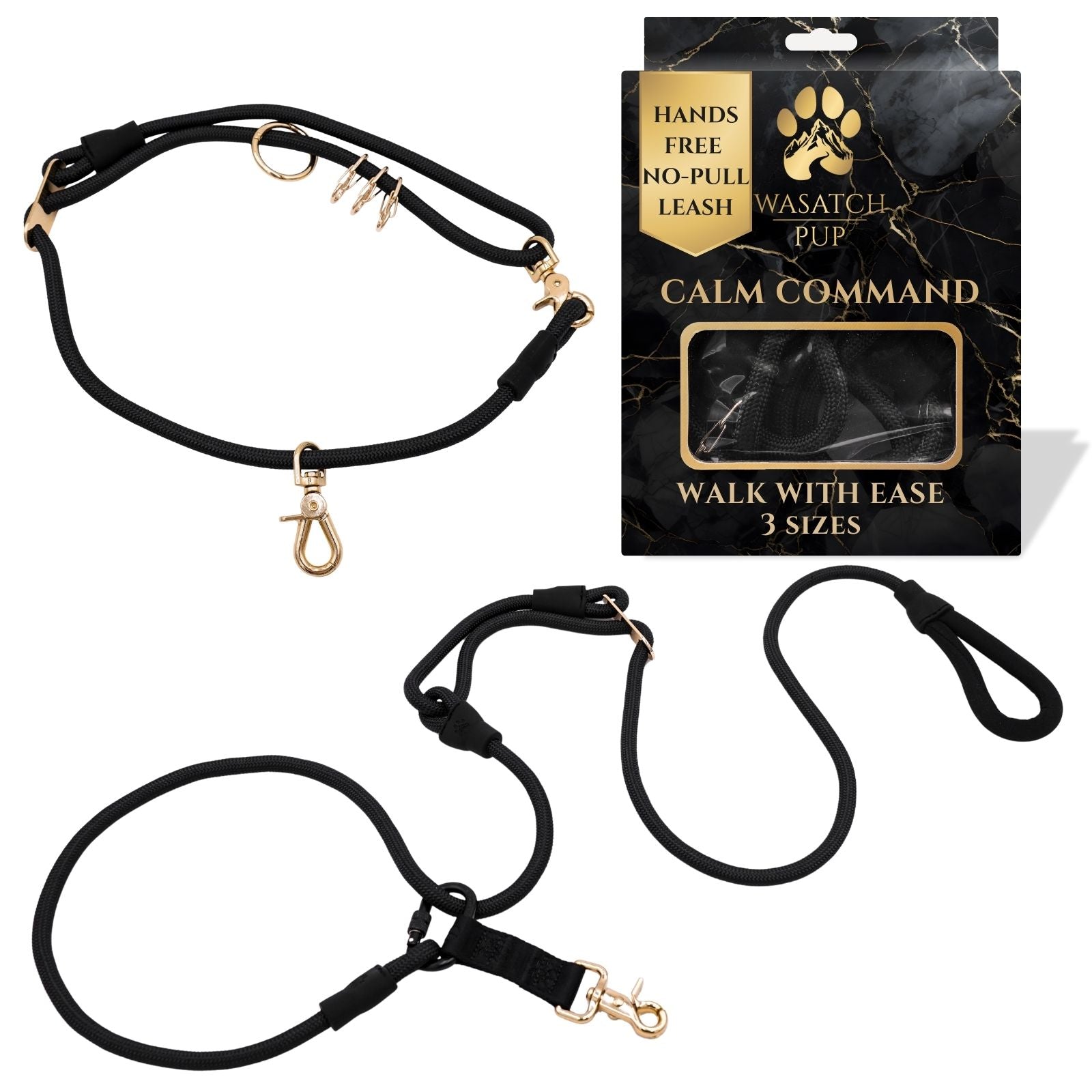
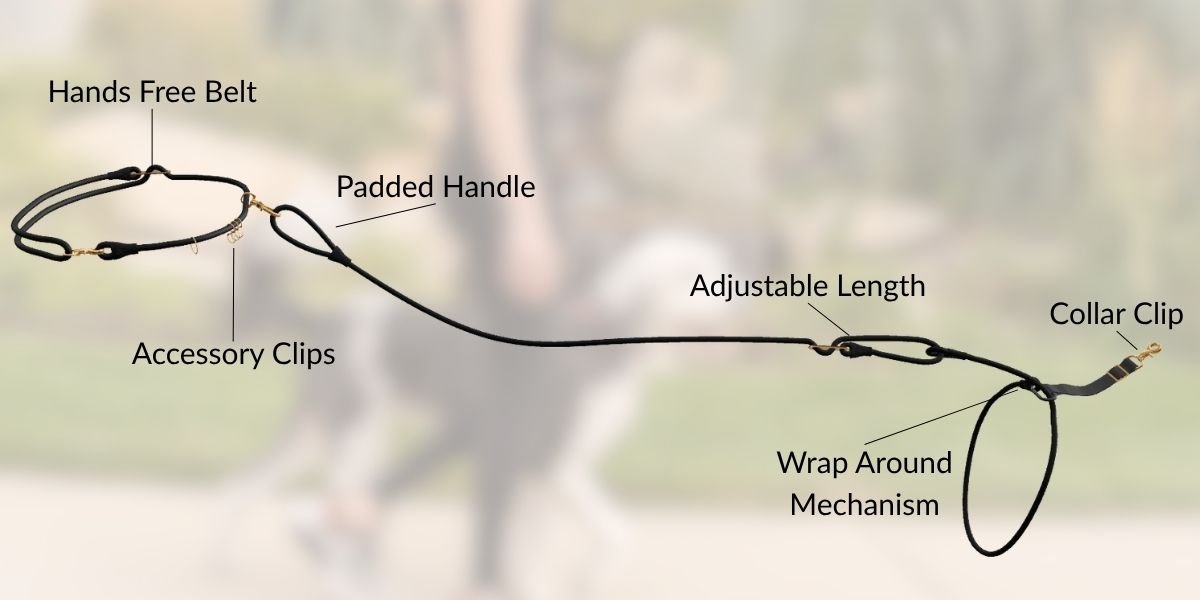
With Calm Command™, the wrap-around configuration is incorporated into the leash itself. Owners don't have to figure out how to recreate the method with a conventional leash every time they go for a walk.
The design is intended to make setup more convenient and repeatable while allowing owners to adjust the configuration for their dog.
Proper placement still matters, and the wrap should be checked throughout the walk to make sure it remains comfortable and correctly positioned.
We also wanted Calm Command™ to be useful beyond the wrap-around method.
It includes a hands-free walking option, padded handles, accessory attachment points, and durable hardware. Owners can use the leash in different configurations depending on the walk and their dog's needs.
For us, the goal wasn't simply to create another no-pull product. It was to build a well-made, versatile leash that could serve several everyday walking needs without requiring multiple pieces of equipment.
Which Dogs Might Benefit From the Wrap-Around Method?
There's no single type of dog that will respond best to the wrap-around method.
Some owners find it useful for dogs that have developed a habit of pulling on a traditional leash. Others use it while working on loose-leash walking with dogs that are still learning.
It may be worth considering for:
-
Dogs learning loose-leash walking: The pressure-and-release feedback may help some dogs recognize when they're creating leash tension.
-
Dogs that regularly pull on walks: Some owners find that the different configuration makes pulling easier to manage while they work on training.
-
Owners looking for additional walking options: A multifunctional leash can offer more flexibility without requiring several separate products.
-
Handlers working on consistent leash communication: The wrap can provide an additional physical cue when paired with appropriate training and reinforcement.
However, a dog that lunges suddenly or pulls with significant force deserves additional consideration. The forces involved can be substantial, and the wrap-around configuration isn't necessarily the right choice for every situation.
Dogs with medical conditions affecting the chest, abdomen, ribs, or spine should be evaluated by a veterinarian before using this type of wrap.
For dogs with significant leash reactivity, fear, or aggression, working with a qualified trainer or behavior professional is also important.
The right equipment should fit the individual dog, not the other way around.
How to Use Calm Command™ to Help Reduce Pulling
Calm Command™ is designed to make walks easier, but the leash itself is only part of the equation. The best results come from combining the wrap-around method with consistent training, positive reinforcement, and attention to your dog's behavior.
1. Start With a Proper Fit
Before heading out, make sure the wrap-around section is positioned correctly according to the Calm Command™ instructions.
The wrap should sit in its intended position near the rear of the ribcage, not farther back across the soft abdomen or groin. It should remain comfortable when your dog isn't pulling, without restricting normal movement or breathing.
Check the position throughout your walk, especially if your dog changes direction, becomes excited, or begins pulling.
2. Reward the Behavior You Want
Dogs don't necessarily pull because they're trying to be dominant. Often, they're simply excited to explore, moving at a faster pace, or responding to something interesting around them.
Help your dog understand what you want by rewarding them when they walk beside you or keep the leash relaxed.
-
Bring small, high-value treats your dog enjoys.
-
Reward frequently when your dog is learning, especially when they voluntarily return to your side.
-
Use praise and encouragement to reinforce good walking habits.
-
Gradually space out rewards as your dog becomes more consistent.
The goal is to make walking calmly with you a rewarding experience.
3. Stop Walking When Your Dog Pulls
If your dog begins pulling, stop moving forward rather than pulling back or jerking the leash.
Wait for your dog to slow down, return toward you, or otherwise release the tension. Once the leash relaxes, reward that behavior and continue walking.
Repeat as needed.
This helps your dog learn that pulling doesn't get them to their destination faster, while walking on a loose leash allows the walk to continue.
Be patient. You might not get very far during the first few training walks, and that's okay.
4. Let the Leash Provide Feedback, Not Force
When used in its wrap-around configuration, Calm Command™ is designed to apply pressure around the torso when your dog pulls and release that pressure when the tension decreases.
You shouldn't need to jerk the leash, apply forceful corrections, or deliberately tighten the wrap.
Pay attention to how your dog responds. If the wrap shifts, becomes too tight, or your dog shows signs of discomfort, stop and adjust the setup. Discontinue the wrap configuration if your dog continues to struggle or shows distress.
The leash does not replace your responsibility to monitor your dog and maintain control throughout the walk.
5. Practice Consistently
Start in a quiet, familiar environment where your dog can focus without too many distractions.
As your dog improves, gradually introduce more challenging environments while continuing to reward loose-leash walking.
Remember that the goal isn't to make your dog depend on the wrap-around mechanism forever. It's to build better walking habits that become more natural with practice.
Calm Command™ is a walking and training aid, not an automatic correction system. Proper use, active supervision, and consistent training are essential. No leash configuration is appropriate for every dog, and owners should always prioritize their dog's comfort and safety.
The Bottom Line
The wrap-around leash method isn't new, and it isn't a magic solution to pulling.
It's a different way of providing leash feedback, using pressure around the torso that releases when tension decreases. Some dogs respond well to it, while others may do better with a different approach.
Like any walking tool, the method has limitations. Proper fit, appropriate handling, and an understanding of the individual dog are essential.
We built Calm Command™ because we saw an opportunity to make the wrap-around configuration more convenient while combining it with the features we wanted in a premium everyday leash.
Our goal is simple: give dog owners a practical, well-made product with more ways to enjoy their walks.
If the wrap-around method works for your dog, Calm Command™ offers a convenient way to use it. If another configuration works better, that's okay too. What matters most is finding an approach that keeps your dog comfortable and makes walking together a better experience.